Service Teaching for Foundation Studies
Course Units
Course Information
Course Coordinator
Dr CDC Steele, School of Mathematics: Room Turing/2.212, Ext 63632, e-mail Colin.Steele [at] manchester.ac.uk
Course Description
Mathematics forms a substantial part of the Foundation Year. Students take 2 mathematics modules in semester 1 and up to 4 maths modules in semester 2. Each module consists of two lectures and a tutorial per week.
Semester 1
- Calculus and Algebra I (Maths 1) : Module 0B1 or 0C1
- The ability to carry out calculations in calculus and algebra is extremely important in all the disciplines into which the foundation year feeds. Students take a module in semester 1 and most take another module in semester 2. There are two pathways available i.e. the B-pathway and the C-pathway. The B-pathway (0B1 in semester 1) is taken by the majority of students and takes up the subject at around AS level or equivalent. However, some students may benefit more from the C-pathway (0C1 in semester 1) which starts from a point a little further back.
- Pure Mathematics (Maths 2) : Module 0N1
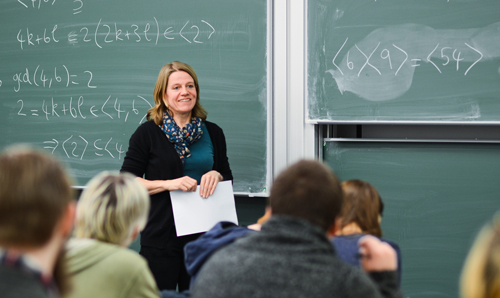
- The ability to carry out a logical deduction is of paramount importance in many degree courses. This course considers logic and several other pure mathematical topics.
- Calculus and Algebra II (Maths 3) : Module 0B2 or 0C2
- These courses are continuations of 0B1 and 0C1 from semester 1 and give a further grounding in calculus and algebra.
- Vectors and Probability (Maths 4) : Module 0F2
- This module is in two parts ; The first deals with vectors i.e. the line from one point to another and how this can be of use in many practical situations. The second part deals with probability i.e. the chances of particular events happening and what can be inferred.
- Mechanics (Maths 5) : Module 0J2
- The ability to understand moving and stationary objects is of paramount importance to students moving forwards to schools such as MACE, Physics, Materials etc. and is useful for students moving forward to other schools. This unit considers statics (the study of stationary objects) and dynamics (the study of moving objects).
- Calculus and Algebra III (Maths 6) : Module 0D2
- This module takes the ideas of 0B1/2 and 0C1/2 further and also includes a section on basic numerical methods. Success in this module will be a great bonus to take forward to Year 1.
Semester 2
Tutorials
For most modules the tutorials normally are based around example sheets i.e. sheets of questions. These are handed out in the lectures and students will be expected to attempt the questions in their own time. The tutorial session is led by a lecturer or postgraduate student (the tutor) and will involve these questions; it is found that students who have attempted the questions in advance will gain more understanding in the tutorial than those who have not. The tutorial will be a place to ask questions about any of the examples causing difficulty. It is also a place to ask any more general questions about the module (although detailed questions on the notes are best dealt with by the lecturer). For 0C1, the tutorial session will involve an element of work with a Computerised Virtual Learning Environment.
Follow the link for details of tutorial groups allocation.Assessment and Coursework
For each course, there will be a two hour examination in January. This will count 80 % of the assessment for the course (75 % for 0C1, 60% for 0N1 ). The remaining 20% (or 25% or 40%) will come from coursework i.e. assignments to be handed in or tests or assignments done during class time.
NOTE: Action will be taken against any student submitting coursework which is not totally their own work. This can include resetting a mark to zero. It is recognised that a constructive discussion between students on questions is a good thing. However, if a group of students drafts out a solution to a question, it is up to each student to show that they understand the solution by writing the solution independently.
No credit will be given for coursework handed in late unless the student's personal tutor contacts Dr Steele to request otherwise (e.g. in case of illness etc).
Questions on the subject matter of the course should be directed to the lecturer or the tutor or to the director of Service Teaching / Course Coordinator (Dr Steele, details above) who can also deal with any questions about the maths courses in general).
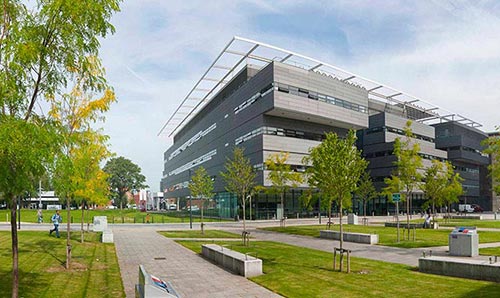
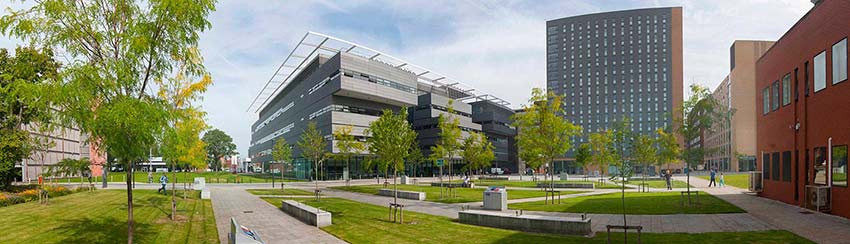
Each lecturer or tutor has an office in the school of Mathematics (Alan Turing Building) and a phone number and e-mail address which can be found from the university staff directory pages ( staff or postgraduate). Students using e-mail to contact staff are reminded to use their university e-mail accounts and to make the subject line meaningful.
Course Assignment
The set of maths course units taken by particular students is determined by the choice of destination school for year 1 and also, in some cases, by selection of options. Note that Mathematics 0B1 acts as a pre-requisite for 0B2 ; 0C1 acts as pre-requisite for 0C2 ; 0B2 or 0C2 acts as co-requisite for 0F2, 0J2 and 0D2 ; 0F2 acts as pre-requisite for 0J2.