Alan Turing (1912 - 1954)
Alan Turing (1912 – 1954) is considered to be the father of modern
computing and his concept of the Turing machine is still one of the most
widely examined theories of computation. His early work was undertaken
at King’s College, Cambridge where he was elected a Fellow in 1935 based
on the strength of a dissertation on the central limit theorem. From 1936 to
July 1938 he studied mathematical logic at Princeton University, in the world-leading research group led by Church. Turing obtained his Ph.D. in
June 1938. His dissertation introduced the notion of relative computing,
where Turing machines are augmented with so-called oracles, allowing a
study of problems that cannot be solved by a Turing machine.
From September 1938 Turing worked for the Government Code and Cypher
School (GCCS) on the problem of the German Enigma machine; on 4th
September 1939, the day after the UK declared war on Germany, Turing
reported to Bletchley Park, the wartime station of GCCS. Within weeks of
arriving, Turing had designed the bombe, named after the original Polish designed
bomba kryptologiczna (or cryptologic bomb). The bombe, with an enhancement suggested by mathematician Gordon Welchman, became
one of the primary tools, and the major automated one, used to attack
Enigma-protected message traffic.
After the Second World War Turing worked on the design of the ACE
(Automatic Computing Engine) at the National Physical Laboratory. In 1948
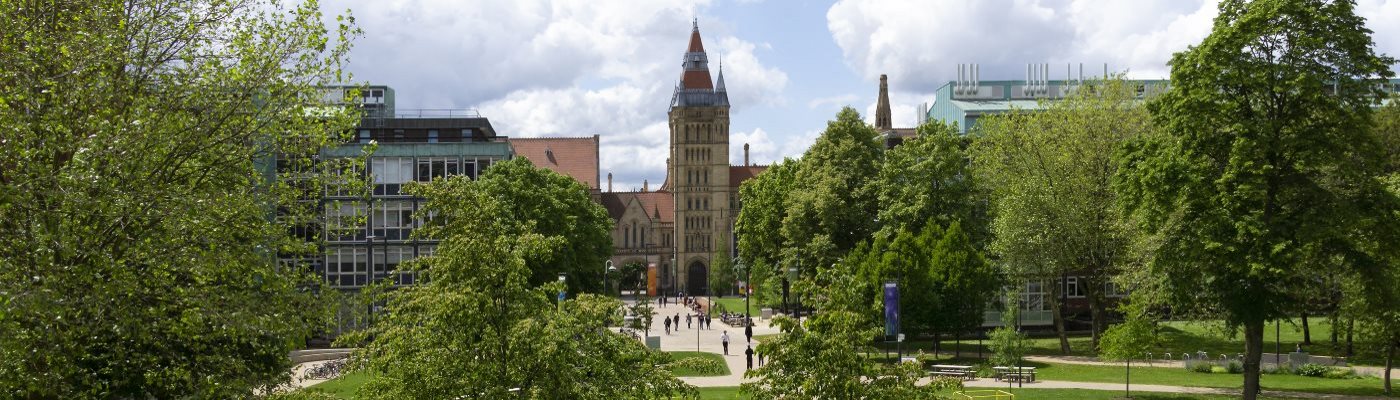
he was appointed Reader in the Mathematics Department at Manchester.
Soon afterwards he became Deputy Director of the Computing Laboratory
at the University of Manchester, and worked on software for one of the
earliest true computers - the Manchester Ferranti Mark 1. During this time he continued to do more abstract work, addressing the problem of artificial
intelligence; he proposed an experiment now known as the Turing test, an
attempt to define a standard for a machine to be called `intelligent‘. The
idea was that a computer could be said to `think’ if it could fool an
interrogator into believing that the conversation was with a human.
In 1952 Alan Turing turned his attention to the then emerging field of
morphogenesis, proposing a new hypothesis for pattern formation in
biological systems. Tragically, Turing did not have time to further develop
his ideas in this area; he died on the 7 June 1954, at the age of 41.
Click here to read Alan Turing's biography on MacTutor